Impact
Our impact
More than 45 student researchers funded, at 12 US universities, with health inequality research now in use at a public health organization.
A gift
A company covers one named cost for one student.
A student says yes
The student takes the position instead of a second job.
The research gets done
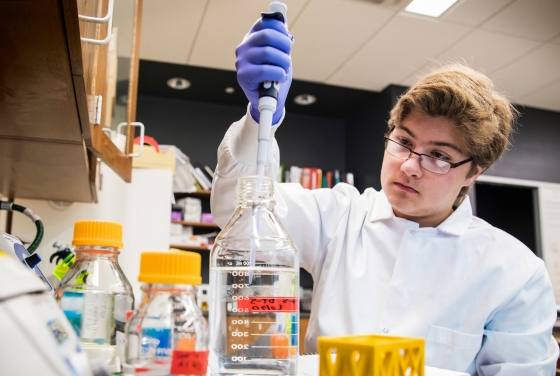
Ten weeks in the lab, or a term on a health economics project.
The work gets published
We pay the journal fee, so the paper appears.
Someone uses it
Research we funded is in use at the Boston Congress of Public Health.
What we count
We count three things, because they are the three things a gift can change.
- Students who took a research position they would have turned down. More than 45 so far.
- Campuses where those students work. Twelve US universities.
- Research that left the lab and got used. The Boston Congress of Public Health case.
Why research is the right thing to fund
Our working hypothesis is simple. Money, more than merit, decides who does sustained research as a student. If that is true, paying the cost should change who stays in science, who publishes, and who gets hired.
The published evidence points the same way. Sustained research predicts finishing a science degree and staying in the field.1 Graduation gaps for low-income and first-generation students shrink or close among undergraduate researchers.2 Paid experience leads to more job offers and higher pay than unpaid experience.3
- The evidence on what research does for a student
- Research and economic opportunity
- Why we fund health inequality research
See the work
Students we work with publish with us. Read the published student work, or the journal articles behind our case.
How we hold ourselves to account
- Every statistic links to a named source.
We checked each journal article's DOI against the Crossref registry and requested every external link on September 21, 2026. The full list is on the sources page.
- We confirm every position before we pay.
A student applies with the lab, the mentor, and the dates. We contact the lab to confirm the position exists and does not pay enough to live on.
- Money goes to named costs for named students.
A gift pays rent, a stipend, books, or a journal fee for a specific student. We do not pool gifts into overhead.
- We report back.
Each funder hears what its gift paid for: the kind of position, the costs covered, and what the student produced.
- We stay small.
A handful of college students runs SRI. We buy no advertising and run no paid programs, so the money reaches students.
Ways to help
Fund a position
Pay a summer of rent and living costs for a student who holds an unpaid research position.
Fund a paper
Cover the journal fee that stands between finished student work and a published article.
Host or mentor a student
Labs can host a funded student. Scientists at partner companies can mentor one.
Sources
- Hernandez PR, Woodcock A, Estrada M, Schultz PW. Undergraduate research experiences broaden diversity in the scientific workforce. BioScience. 2018;68(3):204-211. doi.org
- Haeger H, Bueno EH, Sedlacek Q. Participation in undergraduate research reduces equity gaps in STEM graduation rates. CBE Life Sciences Education. 2024;23(1):ar11. doi.org
- National Association of Colleges and Employers. Position statement: U.S. internships. Reports results of the NACE 2022 Student Survey. naceweb.org
Sources checked September 21, 2026. See every source we cite.
For companies and foundations
Fund a student researcher
Your gift pays for rent, a stipend, books, or a journal fee. It goes to a student who has the position and lacks the money to take it.