Student-run nonprofit, founded 2022
Research experience should not require working for free.
Most student research positions pay nothing, so the students who need a paycheck turn them down. We raise money from companies and give it to those students. They spend the summer on the experiment and know where they are sleeping.
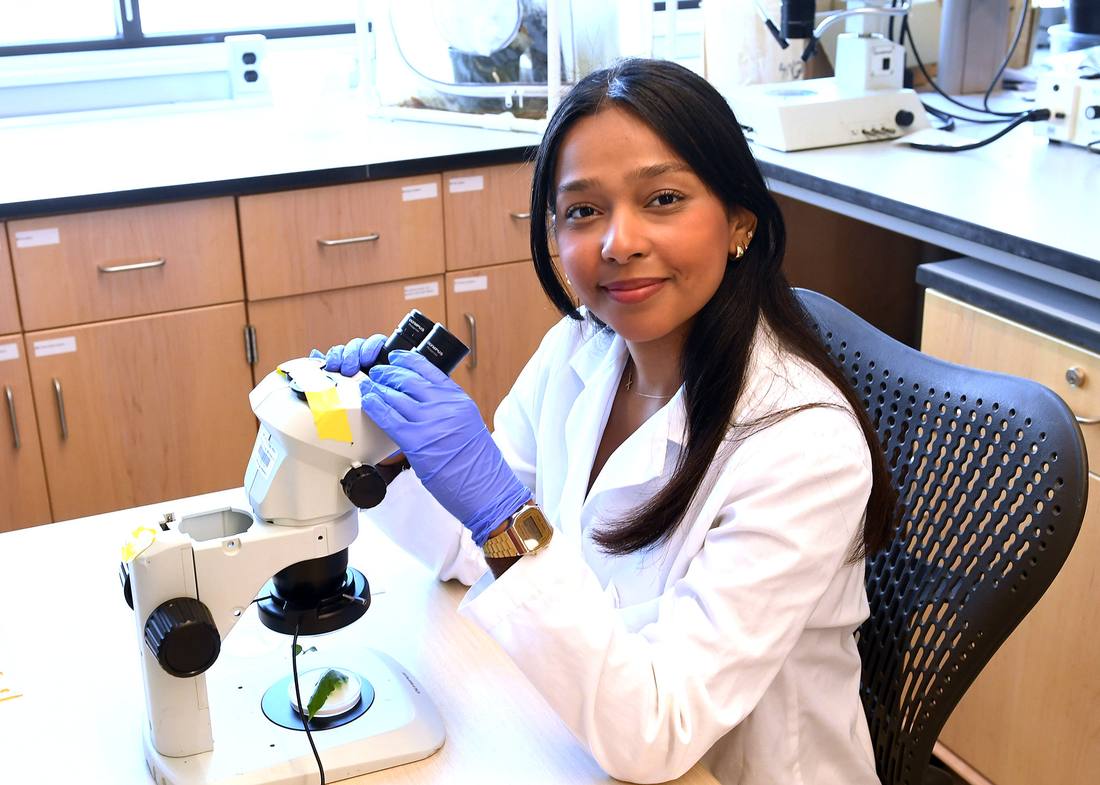
Ten weeks in a lab
What NSF budgets for a funded student
- Stipend, $700 a week
- $7,000
- Housing, meals, travel
- varies
- Ceiling, all costs
- $15,500
- What an unpaid position pays
- $0
We raise the difference.1
Our students hold research positions at

A position that pays nothing still has a price
A summer in a lab costs rent, food, and the wages from the job a student gave up. Nearly 70 percent of college students work while enrolled.2 Students who work to pay for college often cannot volunteer in a lab.3 The positions go to the students who can afford to take them.
The students who take paid positions leave college with more job offers and higher pay than the students who worked for free.
Source: NACE 2022 Student Survey, four-year college students.4
How the money moves
We do not run courses and we do not buy advertising. We raise money and we hand it to students.
A company gives
A company, foundation, or grant program funds a named cost: a summer of rent, a stipend, a book budget, a journal fee.
We match it to a student
A student with an unpaid position applies. We check the position with the lab, agree the costs, and pay them.
The student does the research
The student works the hours the lab needs. The company hears what its gift paid for.
Research we funded is in use at the Boston Congress of Public Health
Students we funded studied health inequality. The Boston Congress of Public Health, a nonprofit that publishes a peer-reviewed public health journal, has used that research.5 It exists because a company's gift covered a student's costs.
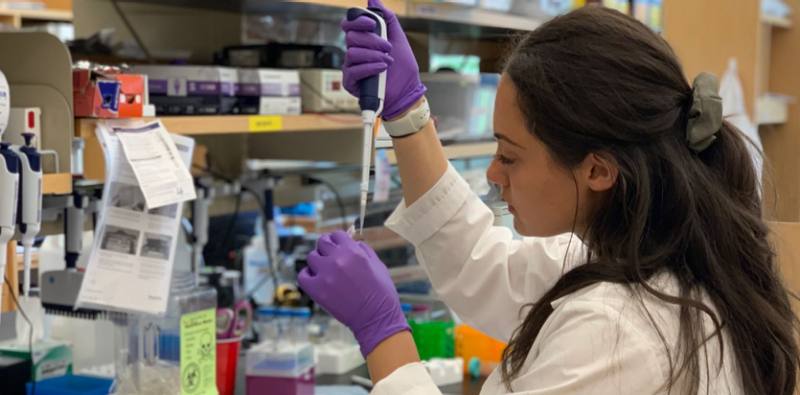
What we pay for
Rent and living costs for a student who accepted an unpaid research position.
Support for students who study who gets care, who pays, and who is left out.
Textbooks, prep materials, and course costs on the way into health and life sciences.
The journal fee that stands between a finished paper and a published one.
We write the grants and the company proposals, so students do not have to.
Twelve universities, five states
Our students hold positions at some of the most research-intensive campuses in the country. A seat at those schools does not come with a way to pay for an unpaid summer. Hover over a highlighted state, or pick one, to see the schools and the research fund at each.
12 universities in 5 states
Choose a state
Hover over the map or pick a state to see the schools and their research funds.
5 universities
Massachusetts
 Harvard UniversityOffice of Undergraduate Research and Fellowships
 Massachusetts Institute of TechnologyUndergraduate Research Opportunities Program
 Boston UniversityUndergraduate Research Opportunities Program
 Boston CollegeUndergraduate Research
 Northeastern UniversityUndergraduate Research and Fellowships
2 universities
California
 Stanford UniversityUndergraduate Research
 University of Southern CaliforniaProvost's Undergraduate Research Fellowships
2 universities
Illinois
 University of ChicagoCollege Center for Research and Fellowships
 Northwestern UniversityOffice of Undergraduate Research
2 universities
North Carolina
 University of North Carolina at Chapel HillOffice for Undergraduate Research
 Davidson CollegeDavidson Research Initiative
State boundaries: US Census Bureau cartographic boundary files (1:10,000,000), via us-atlas v3.
What the evidence says research does for a student
Students who did ten or more hours a week of mentored research for two or more terms were more likely to finish a science degree and stay in science. Shorter stints did not move the numbers.6
At six public universities, four-year graduation gaps for low-income and first-generation students were half as large among undergraduate researchers. At six years the gaps were gone.7
Children from families in the top 1 percent are ten times as likely to become inventors as children from families below the median. Exposure explains much of the gap.8
Six ways to help
Each one puts a student into a position they could not otherwise afford, or gets their finished work into print.
Ways to help
Fund a position
Pay a summer of rent and living costs for a student who holds an unpaid research position.
Fund a paper
Cover the journal fee that stands between finished student work and a published article.
Host or mentor a student
Labs can host a funded student. Scientists at partner companies can mentor one.
Give through a foundation
Grant programs that fund economic opportunity fit what we do. Send us the guidelines.
Refer a student
Know a student who turned down a lab because it did not pay? Send them to us.
Start a partnership
Tell us what your company wants to fund. A student on our team replies.
Our standards
Five commitments that decide what we fund, what we say, and what we spend.
- Every statistic links to a named source.
We checked each journal article's DOI against the Crossref registry and requested every external link on September 21, 2026. The full list is on the sources page.
- We confirm every position before we pay.
A student applies with the lab, the mentor, and the dates. We contact the lab to confirm the position exists and does not pay enough to live on.
- Money goes to named costs for named students.
A gift pays rent, a stipend, books, or a journal fee for a specific student. We do not pool gifts into overhead.
- We report back.
Each funder hears what its gift paid for: the kind of position, the costs covered, and what the student produced.
- We stay small.
A handful of college students runs SRI. We buy no advertising and run no paid programs, so the money reaches students.
For students
Hold an offer for a research position you cannot afford to take? Apply. Still looking? Start with the directory of programs that pay.
From the blog
What ten weeks in a lab costs a student who is paid nothing, using the federal government's own numbers.
4 minA ten-year study found that research keeps students in science only when it is sustained. That finding decides how we give.
4 minA four-sentence email, a way to find labs with funding, and what to do when nobody replies.
5 min
Sources
- U.S. National Science Foundation. Research Experiences for Undergraduates (REU), program solicitation NSF 23-601. Stipend and cost guidance for REU Sites. nsf.gov
- Carnevale AP, Smith N. Balancing Work and Learning: Implications for Low-Income Students. Georgetown University Center on Education and the Workforce, 2018. cew.georgetown.edu
- Bangera G, Brownell SE. Course-based undergraduate research experiences can make scientific research more inclusive. CBE Life Sciences Education. 2014;13(4):602-606. doi.org
- National Association of Colleges and Employers. Position statement: U.S. internships. Reports results of the NACE 2022 Student Survey. naceweb.org
- Boston Congress of Public Health. Founding members, mission, and vision. bcph.org
- Hernandez PR, Woodcock A, Estrada M, Schultz PW. Undergraduate research experiences broaden diversity in the scientific workforce. BioScience. 2018;68(3):204-211. doi.org
- Haeger H, Bueno EH, Sedlacek Q. Participation in undergraduate research reduces equity gaps in STEM graduation rates. CBE Life Sciences Education. 2024;23(1):ar11. doi.org
- Bell A, Chetty R, Jaravel X, Petkova N, Van Reenen J. Who becomes an inventor in America? The importance of exposure to innovation. The Quarterly Journal of Economics. 2019;134(2):647-713. Free version: NBER Working Paper 24062. nber.org
Sources checked September 21, 2026. See every source we cite.
For companies and foundations
Fund a student researcher
Your gift pays for rent, a stipend, books, or a journal fee. It goes to a student who has the position and lacks the money to take it.